
In this guide:
- Why candidate experience shapes employer reputation
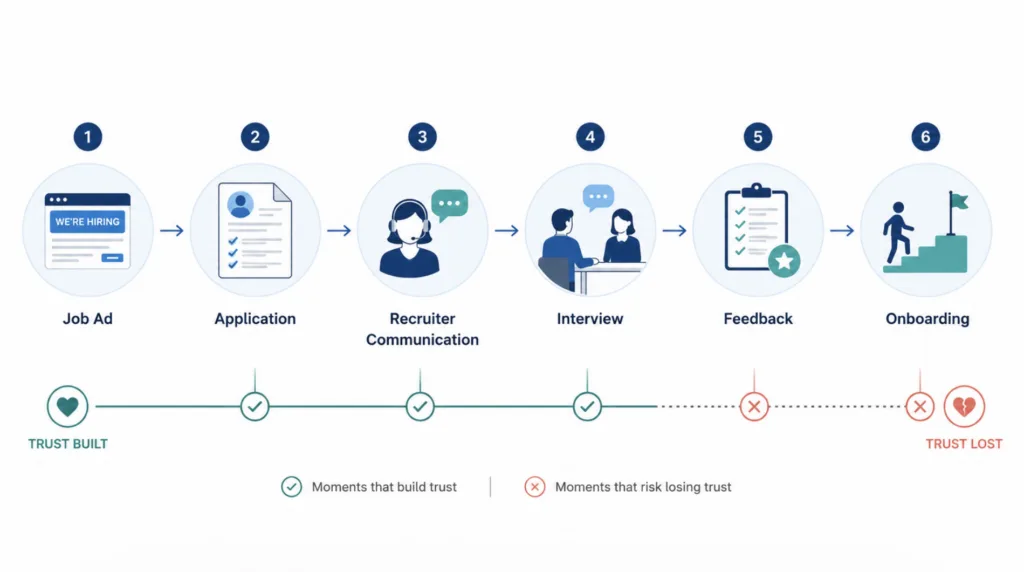
- Where trust is built or lost during hiring
- How engagement turns candidates into future advocates
- What employers can do to improve the candidate experience
- How Integrity supports a stronger hiring experience
- Frequently asked questions
- Support a stronger hiring process from the start
Why candidate experience shapes employer reputation
Candidate experience is how people experience your company during hiring, and it shapes employer reputation before someone ever starts. Candidates notice how clearly you communicate, how organized the process feels, and whether the role matches what was presented.
When hiring is under pressure, weak candidate experiences tend to show up faster in the market. Candidates talk, leave reviews, and decide whether they’d apply again or refer someone else.
For employers, that means:
- Clear expectations reduce mismatch and early drop-off.
- Timely follow-up keeps candidates moving.
- Honest job previews support first-week readiness.
- Respectful communication builds trust, even when the answer is no.
- A consistent process gives people a reason to speak well of your company.
A strong candidate experience helps protect trust, engagement, and employer reputation.

Where trust is built or lost during hiring
Trust usually doesn’t break because of one big mistake. It breaks when the process feels vague, slow, or disconnected from the actual job.
Clear expectations start before someone applies
A candidate’s first impression often starts with the job ad. If the post is vague, overstated, or missing key details, the process has already started off on the wrong foot.
Candidates should be able to understand:
- What the role involves day to day
- What skills or experience matter most
- What the schedule or work environment looks like
- What the hiring steps include
- When they can expect updates
Clear expectations give candidates a better read on the role from the start. In fast-moving, high-volume hiring, that can help reduce early turnover and ease pressure on supervisors.
Communication keeps candidates engaged
This is where many hiring processes start to lose people. Long gaps, unclear next steps, and generic outreach make candidates feel like they’re stuck in a black box.
Strong communication keeps the process moving and cuts avoidable friction.
| Hiring touchpoint | What candidates need |
|---|---|
| After applying | Confirmation that the application was received and what comes next |
| Before interviews | Clear timing, format, location or link, and role expectations |
| During delays | A quick update so they’re not left guessing |
| After a decision | A timely, respectful close to the process |
| Before onboarding | Clear day-one instructions and practical next steps. |
When candidates know where they stand, they’re more likely to stay engaged. When they don’t, employers risk losing people who were ready to move forward. In busy operations, this can slow hiring, widen coverage gaps, and add more strain to a team that’s already stretched.
How engagement turns candidates into future advocates
Candidate engagement still matters after the process ends. People who move through hiring continue to shape how your company is talked about, whether they were hired or not.
A respectful process gives people a better experience to talk about. They may reapply, refer someone else, leave a positive review, or stay open to future outreach. A poor one can shrink future applicant flow, weaken referrals, and make the next ramp harder.
For high-volume hiring, that carries real weight. The way candidates move through today’s process can affect how easily you hire tomorrow. A better candidate experience helps protect the future strength of the pipeline, as well as the overall employer brand.

What employers can do to improve the candidate experience
Improving the candidate experience starts with fixing the parts of hiring that create confusion, delay, or mismatches. The goal is to make the process easier to understand, easier to move through, and easier to trust.
A good place to start:
- Remove unnecessary steps from the application
- Make job expectations more specific
- Set realistic timelines for each stage
- Train hiring teams on communication standards
- Close the loop quickly after interviews and decisions
Use feedback to find friction
If you want to know where the hiring process is falling short, ask the people moving through it.
Short surveys and early check-ins can show where candidates feel stuck, confused, or misled. They can also show whether the job matched what was presented once someone started.
Patterns matter. If candidates keep asking the same questions, the process may be unclear. If new hires say the role felt different than expected, the job preview may need work. If people disappear after interviews, slow follow-up may be part of the problem.
Used well, feedback helps employers spot repeat issues, make practical fixes, and improve the process before those problems turn into drop-off or early turnover.
Balance technology with human support
Technology can help hiring teams move faster. Automated confirmations, self-scheduling, text updates, and after-hours screening can reduce delays and keep candidates informed.
Speed alone isn’t enough, however. Candidates still need clear answers, realistic expectations, and communication that feels specific to their situation. If the process feels fully automated, the employer can come across as distant or disorganized, even if the tools themselves are working.
The best hiring processes use technology to handle routine steps and free up recruiters for the parts that require judgment, context, and real conversation. That balance matters most when you’re hiring at volume and cannot afford to lose good people because the process feels cold or hard to follow.

How Integrity supports a stronger hiring experience
Integrity Staffing Solutions helps employers create a hiring experience that is clearer, faster, and more aligned with the job from the start.
Our associate-first approach helps candidates understand the work, the expectations, and the next steps, so they stay engaged and arrive better prepared.
Integrity supports employers with:
- Clear job alignment and realistic role expectations
- Candidate communication that keeps the process moving
- High-volume hiring support during surges, callouts, and rapid ramps
- Staffing models that fit the hiring need
- Technology that supports around-the-clock screening and engagement without replacing human judgment
Recruiter Jamie, our agentic AI recruiter, helps us keep that process moving around the clock.
We also stay clear about scope from the start. Whether you need temporary staffing, direct hire, or RPO, our team is here to help you choose the right model and set clear expectations from first contact through start date.

Frequently asked questions:
What is candidate experience?
Candidate experience is how job seekers experience your company throughout hiring. It includes the job post, application, communication, interviews, feedback, offer decisions, and the transition into onboarding.
How does candidate experience affect employer brand?
It affects employer brand because candidates use the hiring process to judge how organized, respectful, and trustworthy your company is. A weak process can damage reputation before day one.
Why does candidate communication matter during hiring?
Candidate communication keeps people informed, reduces uncertainty, and helps prevent drop-off. For employers, it also protects hiring speed, supports engagement, and makes the process feel more credible.
What makes a candidate experience feel trustworthy?
A trustworthy candidate experience usually comes down to clear expectations, honest job previews, organized interviews, timely updates, and respectful follow-up. Candidates want to know the job, the process, and what happens next.
How can poor candidate experience hurt recruiting?
It can lead to drop-off, negative reviews, fewer referrals, slower hiring, and weaker response rates over time. That makes it harder to build a dependable pipeline when hiring needs pick up again.
How can employers keep candidates engaged?
Employers can keep candidates engaged by making the process easy to follow, setting clear timelines, updating people when plans change, and keeping each touchpoint relevant to the role.
How can a staffing partner support candidate experience?
A staffing partner can support candidate experience through job alignment, communication, screening, follow-up, and placement support. That consistency matters most during high-volume hiring, seasonal ramps, or other fast-moving recruiting conditions.
What role does onboarding play in candidate experience?
Onboarding shapes whether the hiring process feels complete and credible. Clear first-day instructions, realistic expectations, and a smooth handoff help protect trust, reduce confusion, and support stronger early retention.
How can candidate feedback improve hiring?
Candidate feedback helps employers spot friction in the process, such as unclear expectations, slow follow-up, or confusing application steps. Used properly, it supports practical fixes before those issues affect hiring results.
Can technology improve candidate experience?
Yes, when it is used well. Tools for screening, scheduling, and updates can reduce delays, but recruiters still need to provide clear answers, context, and human judgment throughout the process.
Support a stronger hiring process from the start
When candidate communication, job alignment, and follow-through are clear from the start, employers are in a better position to reduce confusion, improve readiness, and keep hiring moving. Integrity Staffing helps employers strengthen that process with the staffing model, structure, and support that best fit the work.
To discuss your hiring process and support needs, call us at (302) 661-8770 or reach out online at integritystaffing.com/contact-us/.